Urban Suburban Mommy

  • The Struggle is Real
  • Domestic Goodness
    • DIY
    • Delicious Dishes
  • Urban Suburban Mommy
    • The Best You
    • Urban Suburban Daddy
    • Mommy Approved
      • Sponsored Post
  • Bon Voyage
  • Fame & Fam
  • 10 Questions
  • FML Mommy
  • About
    • Contributors
    • Contact us
    • Home
    • Write for us
    • Work With Us
  • Elisa Krovblit Keay

Category Archives: 10 Questions With

10 Questions with Voula Halliday on getting kids to eat well

Posted on November 21, 2017 by Urban Suburban Mommy Posted in 10 Questions With .

The struggle is real. You pack what you think is a healthy lunch and when you clean out their lunch box after school you see the apple untouched, one bite out of the sandwich and the half-eaten yogurt is covering everything with a thin, disgusting layer of congealing goo. I know – sometimes I just want to throw the whole lunch box out. But those containers are expensive! And then on to dinner, which is a negotiation situation that rivals any Wall Street lawyer’s skill for arguing a case.

Urban Suburban Mommy caught up with one of this country’s national treasures, Voula Halliday. She’s prized for being able to overcome the irrational demands of any child’s appetite. A Le Cordon Bleu-trained Chef, she was the featured chef on the Steve and Chris show and has written for many publications on the subject. She has also written the must-have cookbook Eat at Home. We had the chance to ask her the 10 questions you know you want to know about just getting your kid to eat!

1. What does the ideal school lunch look like? Hot or cold?

[Laughing] I say ask your kid this question! The ideal school lunch is one that is nourishing and one that they will eat. Conversation is the key to establishing this. Ask your child to share with you what she or he enjoys to eat at lunch. Sometimes food that they love eating at home isn’t as appealing after it’s been sitting in a lunch box for a few hours so it gets set aside and left uneaten, even if they are hungry. Here’s an article I wrote on this subject for Today’s Parent.

2. What do you recommend for picky eaters?

I’m not a big fan of defining kids as “picky” because I think that kids are still learning what they like and don’t like, and that’s okay. I suggest encouraging children to try new things all the time. And don’t give up after the first time they taste something and say “yuk”. New flavours and textures sometimes need to be experienced a few times before they are embraced.

3. Some parents think there should be a main, a fruit and a snack in the school lunch; others throw in 5 or 6 small graze-able items. What’s the best route?

I think it’s perfectly fine to go with either option. It’s more about packing a lunch that your child will enjoy and that will give them the fuel they need to get through the day. If you know your child is better with fewer choices at mealtime, go with a square meal. If they are someone who likes to move around a plate that is a mix of things, then offer small portions of a variety of items. Something important to watch out for is that you don’t put too much food in their lunch because that can be a turnoff for kids.

4. Does having a special lunch box – a bento or timpani – help for kids? Does the visual presentation impact their appetites?

I am very much a visual person and I appreciate a special lunch box, but I don’t think that you have to use fancy lunchboxes to make lunch more appetizing.

For kids one of the biggest barriers to eating lunch is access to their food. Some containers are so difficult for little hands to open so look for easy-to-open lids. If you are buying a bento style box, look for ones with partitions so that the food inside doesn’t get tossed about or mixed up. No one wants their blueberries tasting like tuna. It’s a good to go shopping with your child so you can ask if they can open a container easily before you purchase it.

5. What super-foods should always be in lunches – meals in general?

There are so many wonderful whole foods that can go into creating a balanced meal for lunch. Visualize half the meal made up of vegetables – peppers, peas, tomatoes, zucchini, cucumber, chopped lettuce or cabbage, carrots, cauliflower, celery, and pickles too. I could go on! A combo of their favourite vegetables, either raw or blanched (to keep them bright and flavourful it’s better not to over-cook veggies) and cut into bite-size pieces is great on its own or as part of something like a salad or a pasta dish.

Make the rest of the meal up from a balance between a protein such as chicken, fish, eggs, beans, cheese, yogurt, tofu – whatever your child enjoys – and a super-healthy starchy carbs. Quinoa, rice, fruit, beans or sweet potatoes are all great choices.

Sometimes I combine quinoa or rice or rice pasta with black beans, chicken, and a variety of my daughter’s favourite veggies that I have finely chopped. I add a bit of lemon and olive oil and some seasonings and create something tasty and super nourishing. She loves it.

6. Some parents say, “It’s just a treat” while others feel sugar is a total no-no in school lunches. Some teachers send home shaming notes for bad food choices. Is sugar a hard “no” in your books?

I’m always so surprised at how much refined sugar is showing up as an ingredient in processed food. It offers no nutrient value so it’s one of those ingredients that we all should be careful to note how much we are consuming.

I’m against shaming because it doesn’t provide parents or children with what they really need – to know what is in their food so they can make informed choices. My approach isn’t a “total no-no”, instead I use my skills to help guide people with ease and I offer solutions that are accessible for all sorts of meal requirements in my cookbook – even for sweet treats – often using honey or maple syrup instead of refined sugar.

When balanced by a diet that is overall healthy – based on whole foods, not processed – and an active lifestyle, having a portion of brownie or cake is okay.

[Brownies in my cookbook are made with black beans!] (Urban Suburban Mommy says: And they’re delicious! Your child will never know. We taste tested two batches “on the kids” lol. So good!)

7. With the peanut butter ban in most schools, is there a good way to get protein into their diet in another easy go-to sandwich?

Yes, besides the usual sandwich fillings of meat or fish you could instead go add sliced boiled egg, or slices of cheese.

I like making a sandwich spread in the food processor combining one can of drained chickpeas or black beans, a clove of fresh garlic, extra virgin olive oil, lemon juice and some seasoning. It’s very handy to have this in the fridge as a handy source of protein. You can make a spread like this out of edamame too.

8. Making lunch is time consuming, any tips on short cuts?

So many tips! At home my mantra is “Cook once, eat thrice!” We’ll cook with a plan to have leftovers so that meal prep during the week is easier. Eat at Home is full of what I call Loveable Leftovers – ideas for how to turn what’s left from one dish, into another meal. One of our favourite lunch box items is a savoury muffin I make from leftover chicken or ham, cheddar and little chunks of green apple. It’s so good! I’m the kind of person that would take leftover blanched broccoli and chopped leftover roast potatoes and turn it into a salad with the addition of whatever else I could pull from the fridge.

Other tips: We pre-cut veggies so that we can whip up a salad easily. We cook extra rice, pasta or quinoa at dinner to add to lunch and we regularly roast skinless chicken thighs or breasts to have in the fridge to add to mix in with our grains and veggies.

Another thing I find that comes in handy for lunch is finely sliced cabbage or Napa cabbage –it holds up so well and provides great crunch and nourishment to any salad or grain bowl.

9. What is the hardest part about feeding kids?

I think the hardest part for all of us, is time.

It’s hard to come home at the end of a long day, deal with homework and then have time to prepare a tasty and nourishing meal. So what to do? First, start having conversations as a family about foods you like – and involve children when you can in mealtime prep. You can learn a lot when you are all hands-on in the kitchen.

10. What is the best advice to parents on how to approach feeding kids healthy meals? Sometimes it’s chicken nuggets or pizza slices just to avoid a fight, how can parents move past that?

Involve them! Go to the grocery store as a family activity one day – when you aren’t stressed and racing against time. List favourite foods and talk about how to incorporate them into meals you will all enjoy. And during the week, keep it simple – it’s okay to cook the same things, or variations of the same, more than twice or three times in a month. If you can, create habits that help you – like making extra portions of favourite things to freeze and freeze leftovers in single servings that can go from the freezer to the lunch bag.

And yes, sometimes it’s going to be pizza or chicken nuggets – not necessarily to avoid a fight, but because you feel confident and good that you have established overall healthy balanced eating at mealtime so occasional convenience foods are perfectly A-OK!

EAT AT HOME contains over 150 recipes that show how easy it is to cook fresh, healthy, tasty meals every day of the week, including how to buy only what you will use, use everything you have on hand, swap ingredients without sweating it, and transform extras into Loveable Leftovers so you waste nothing.

About Voula:

Voula Halliday is a chef, writer, and artist with diverse and extensive experience in the food industry. A proud graduate of Le Cordon Bleu, she has presented her work on morning television and radio shows, and was one of the chef experts on CBC Television’s award-winning daytime show Steven and Chris. Most recently, she appeared on CTV’s Your Morning to whip up her yummy Apple Cheddar Chicken Muffins (see recipe on UrbanSuburbanMommy.com) and Bacon and Cheddar Quinoa Fritters. You can view the segment here:

Voula’s first appearance on Steven and Chris came about after she was discovered by one of the producers who was volunteering at a Public School where Voula served as the executive chef and program coordinator. She brought Voula onto the show after being taken by her warm personality and the way in which she transformed the usually mundane and unhealthy school lunches into fresh, nutritious and delicious meals for the students and faculty. Voula’s work has appeared in print and digital formats in a variety of publications, including Chatelaine, National Post, Reader’s Digest, and Bon Appétit.


Tags: cookbook, eat at home, food, healthy food, picky eater, recipe, school lunch, voula halliday .

10 Questions with a coder

Posted on August 2, 2017 by Urban Suburban Mommy Posted in 10 Questions With .

photo by: Donnie Ray Jones

A coder?

Yes. A coder.

Us 40-something parents who grew up with manual typewriters didn’t learn to use a computer until our 20s, may recall the hundreds (lol) of web pages that were online in the early 90s.

It still blows my mind that there is a language to talk to computers (and really blows my mind that two computers learned to speak to each other last week and then created their own language –– hello SkyNet from Terminator Genisys) so it’s starting to become more clear why coding is important to know.

We caught up with Jen Chiou, founder of CodeSpeak Labs to find out about coding for kids. She has created computer programming classes for students from PreK to Grade 12. Most recently she created CodeSpeak Books, just launched on Kickstarter, geared toward children 2 to 6+ years of age. The first book, How to Turn Your Grownup into a Robot, is the perfect way to engage children at such a young age. And Jen’s not just a teacher – she has two small boys, 3 and 1, and is already teaching them the basics.

We asked Jen the questions you know you want to know about getting your kids to learn how to code.

1. What is coding?

Coding is giving instructions to a computer so it knows what you want it to do. In order to create and control technology, you have to speak computer languages.

2. How does coding apply to my child’s life?

If your child is anything like my kids, they already gravitate toward wanting to use technology. Unfortunately, most of that is passive, like watching YouTube videos.

We want kids to be creators of technology, so that they can help shape the future. In order to do that, they have to be code literate.

3. How young can you teach coding to a child?

CodeSpeak Books is one of the age appropriate ways you can start teaching children computational thinking, the foundation of coding. We say the book is for kids as young as 2, though similar to any picture book you have, you could start reading it with your child even earlier!

4. What keeps their interest about coding, it seems intense?

Keeping it fun is key. CodeSpeak Books are entertaining and interactive – kids laugh and delight at seeing how the code changes the course of the story.

5. Is coding going to be integral for future success?

For our kids’ generation, coding is as important as reading and writing.

No matter what field they decide to pursue, technology is going to play an important part. Coding early in life not only gives them technical knowledge, it actually broadens how they think about problem solving.

6. Does coding language change? How can I keep my child up-to-date?

There are many programming languages. Professional software engineers are constantly learning.

What’s most important is teaching kids the fundamental logic, which applies across languages, and helping them develop a growth mindset so that they are eager to tackle new problems and continuously improve.

7. I’m practically computer illiterate since I grew up without computers. I didn’t have an email address until the 90’s, and started with the World Wide Web Worm.

I can’t code – how can I help my child?

You’re not alone! Most parents don’t know how to code.

What’s great about CodeSpeak Books is parents AND kids learn at the same time! Any who can read can learn from CodeSpeak Books, no prior knowledge necessary.

8. Will my child need sophisticated equipment and expensive computers to be a successful coder?

Definitely not. When you learn from a book you can read it without any other technology. When your child is ready to use a device, you can use the code on any laptop/tablet that has an Internet connection.

9. Does coding lead to too much screen time?

We leave it to parents to decide how much screen time their children have. Learning code involves both screen and non-screen activities.

And if your child is ready, you can use a device alongside the story and code together.

10. What is the demand for code?

Jobs in computer programming are among the fastest-growing and highest-paying opportunities in the world today. Even if your child doesn’t become a computer programmer as a career, the ability to understand how technology works will benefit them in any field.

Jen Chiou:
Jen Chiou, founder of CodeSpeak Labs, established computer programming classes for students from PreK-12 in classrooms in NYC and CA. Prior to founding CodeSpeak Labs, Ms. Chiou worked in tech – where she was shocked at how difficult it was to recruit a diverse tech team.

“I’m the mom of two, Maxwell, 3 and Alexander, 1 and a half,” Jen shared. “I’ve found stories to be one of the most powerful ways to engage my kids in big ideas – from potty training to being kind to others. So I hit upon the idea to experiment with different coding stories with my 3 year old. He’s hooked and loves the stories and the accompanied learning.”

Tags: code, CodeSpeak, coding, computers, jen chiou, kickstarter, technology .

10 Questions with CityLine’s Beauty Expert Grace Tartaglia

Posted on February 16, 2017 by Urban Suburban Mommy Posted in 10 Questions With .

We at Urban Suburban Mommy had the pleasure of sitting down with regular Cityline beauty expert Grace Tartaglia. She is an inspiring woman who prides herself on helping women look their best. We thought that all you moms out there would benefit from her great advice and tips about looking your best!

1. What is your favorite go-to hair product?

My favorite hair product would be uniq one because it has 10 real benefits for your hair.  The product repairs dry damaged hair, offers shine fizz control, silkiness  and smoothness, hair color protection. The product also helps your style to last longer and adds body.


2. What is the thing you feel most women overlook or don’t prioritize when it comes to their beauty regime?

Woman overlook or forget about dehydration. You must deeply hydrate your hair from Roots to ends because your hair needs extra love.  Do this 2 to 4 times per month with a product that’s right for your hair type. This will help your hair to become stronger, healthier, shinier.  Women also overlook their faces. It’s so important to use a face scrub because it will gently exfoliate and brighten your skin tone leaving the skin feeling smooth, cleaned and renewed.

3. Us moms are always talking about being exhausted – and we look it. Is there anything you can recommend to make us look more refreshed than we feel?

Keep it simple and plan ahead: wash your face, use moisturizer for your skin type, use a BB cream or a tinted moisturizer and little blush, a tinted lip balm or lip gloss, mascara and do not forget your concealer. By using an effective concealer to cover dark circles, it will help you not look so worn out. Pay attention to your whole look, your hair your clothes.

4. Does an ‘easy’ style or a ‘wash and go’ always mean short? Is the pixie the go-to?

Easy style does not have to mean short – get a great haircut. Get your stylist to give you an easy to maintain style, something that can be pulled off your face quickly and easily, keep it at your shoulders or a chin length depending on your face shape.

5. As the greys come through, they have a crazy texture, how do you tame them?

You can tame crazy texture from grey hair by actually coloring it. The dye molecules fill in the missing pigments, and help to smooth out the cuticle.

6. There are so many color choices – is there an age that’s considered “too old” for wild colors?

There are so many color choices.  There is no color that I would say that is too old or wild for a person. It really depends on your personality, your career, and how you would like to present yourself to the world. Hair color can change how you look and feel about yourself.

7. We often hear “Long hair can make you look older.” At what age does this start being an issue – or is it untrue?

I really think that way of thinking is outdated.  Cutting your hair too short when your 40 and older, without considering your face shape and your hair texture, can actually make you look older for example.  If your hair is healthy and cut in the way that suits your face shape, I say yes to long hair.

8. What’s the next look that’s coming into style?

Hair trends for 2017 include ultra voluminous hair.  Braids are still on trend with a modern twist on traditional style.

9. When women are looking for a makeover, where do you start to figure out what the ‘new’ look should be?

I take a look at the skin, the hair and the eyes and see how they’re working together.  I then ask my client what length she would be comfortable with and I take it from there.   I then suggest hair colour, the best hair cut for your hair type as well as the best way to style your hair.  When we’re comfortable with all this, and we’re finished the hair makeover, I take my client through the process of doing your make up in five minutes.  My goal for any makeover is to teach my clients how to create their best self and look polished.

10. How do you get women to give up the pony tail?


I don’t!! Ponytails are a staple like a little black dress. What I do teach is how to try a ponytail in many different ways. From side parts to poof on top – put it over one side, curled – the possibilities are endless.

ABOUT GRACE TARTAGLIA

Grace Tartaglia is one of Canada’s leading foremost experts in beauty. With a regular presence in millions of homes through her longstanding guest expert position on City TV’s City Line.

Grace is known for her ability to create a women’s best self by allowing her natural beauty to shine through. Grace has been nominated for numerous prestigious awards within her profession.

Grace was given the honor to be the be the spokes person for the Princess Margaret hospital Nohairselfie campaign. They raised the largest amount ever for one haircut totaling $740,000. She is constantly updating her knowledge and education. She has a strong following of a number of notable celebrity clients and on air personalities as well as a very strong following of loyal clientele.

As a spokesperson for Revlon Professional Grace has traveled around Canada and the world both teaching and learning new color techniques, workshops and seminars.

Graces very busy schedule includes working on stages at hair shows, attending gala events, behind the scenes at fashion shows, judging hair styling competitions all while juggling her regular guest spot on a Cityline and running her highly sought after downtown Toronto Salon “Image Makeover”.

Grace is an expert at translating runway looks to wearable styles, while elevating a women’s self esteem in the process.

Tags: beauty, color, Grace Tartaglia, Grey Hair, Hair for moms, Ponytail, Revlon, Uniq .

10 Questions with TV personality and fitness guru Tommy Europe

Posted on January 23, 2017 by Urban Suburban Mommy Posted in 10 Questions With, Fame & Fam .

When Elisa and I decided to take on wellness for the next 30 days, I thought about the people around me who inspire me to live well. TV star/trainer and dad Tommy Europe immediately came to mind.

I used to watch Tommy’s TV shows The Last 10 Pounds Bootcamp and Bulging Brides avidly. In fact, when I had to squeeze into my wedding dress and only had a few months to go before the big day, I decided to enroll in a boot camp and it was the best decision I ever made.  Thanks Tommy!

So, I reached out to him (Tommy Europe – TE) to get his take on wellness so that he too could inspire you to live life to the fullest by exercising and making good choices.  Here is what he had to say:

1. What does wellness mean to you?

TE: Wellness means a lot of things. It means healthy living, nutrition, and doing things that you want to do.

2. Why do so many people fail at fitness regimes or sticking to a routine?

TE: I think a lot of people are unrealistic in terms of sticking to a routine. They try to take on too much, too fast. They focus on too much – they breakdown and ultimately, fail.  It so much better to start small.  Try going to the gym for 15 minutes to start and then increase the time, every day.  It’s about eating healthy too.

3. What advice can you give to jump start getting in shape?

TE: Focus on one thing. Commit to being active 3 days of the week. If you don’t like going to go to gym, try something else, but just make sure you move.  Try a boot camp, dance, group fitness. Recruit a friend so you can work out together. It will make you accountable.  Consider hiring a trainer.  You don’t need to work with a trainer five days a week but start.  He/she will also keep you accountable and spur you on.

4. What is your favorite kind of exercise?

TE: It varies.  I really like mixed martial arts.  In the gym, I like work outs that involve functional movement.  I am not concerned with how much weight is used but rather that the exercise is done properly.  Variety is super important so you don’t get bored.

Tommy Europe with his family on vacation

5. What exercises/workout can you recommend for busy parents?

TE: Get active with your kids. I have a 7 and a 5.5 year old and we make cleaning up their rooms fun, by incorporating lounges and squats. Just move.  Do what you like.

6. Do you think children can be part of your work out every day?

TE: It’s a great concept but I don’t think it’s possible do get a good work out with kids every single day.  You can certainly work your children into the workout on occasion.  For example, I take my kids to the gym the kids like to pull themselves on the suspensions while I am working out.  Take advantage of the time when kids are playing – even if it is 10-20 minutes and work out.

7. How is important is it to set fitness goals?

TE: If you want to be successful, you need to do it. When someone starts a business, they start with a business plan. You have to do the same with fitness and create a fitness plan.  You also need to work on your contingency plan. When you write down your goals, you can refer to them.  These goals will then be crucial to your success.

8. How fast can one expect results when working out?

TE: It really depends on how much time you spend working out.  It will take a lot longer to achieve your goals working out one day a week vs. 3-4 times a week.  It’s about how badly you want it.  This should all go into your fitness plan including how many sizes you want to drop as well as how many pounds.

9. Most important tip in the quest to getting in shape?

TE: Keep on going.  Everyone has good days and bad days.  Go for it. Be ready so you never have to get ready…

10. What should one look for a in a personal trainer/boot camp?

TE: Look for somebody who is motivated. Somebody who has your best interest in mind and will teach you something.  Somebody who can provide constant motivation, challenge you continuously and change it up  He/she should know where your coming from including your fitness background, and what you want to achieve.

https://www.youtube.com/watch?v=Vjdhh3jlKmo

ABOUT TOMMY EUROPE

Best known as the tough love television host of the “The Last 10 Pounds Bootcamp” and “Bulging Brides” Tommy Europe is Canada’s most recognized and sought -after fitness coach.

Founder of Tommy Europe Fitness, Tommy is an entrepreneur, award-winning fitness coach, published author, keynote speaker and creator of the SHRED Training Philosophy.

Tommy earned his fitness credentials in the school of very hard knocks – as a Professional football player. An 11 year veteran, Tommy was a two-time all-star defensive back in the Canadian Football League, playing with the Montreal Alouettes, Winnipeg Blue Bombers and BC Lions. His football career included winning the Grey Cup in 1994, and earning a shot in the NFL with the New Orleans Saints. Tommy is also an honored member of the BC Sports Hall of Fame, BC Lions Wall of Fame, and BC Football Hall of Fame.

Facts about Tommy Europe:

  • Two-time all-star defensive back in the CFL
  • Founder of the SHRED Training Philosophy
  • Award-winning fitness coach
  • Best-selling author
  • TV Host

www.tommyeurope.tv

https://www.facebook.com/TommyEurope

https://twitter.com/TommyEurope/

https://www.instagram.com/tommyeurope/


5 Comments .
Tags: Bootcamp, Bulging Brides, fitness, health, personal trainer, The Last 10 Pounds Bootcamp, Tommy Europe, Workout .

10 Questions about placenta encapsulation

Posted on January 6, 2017 by Urban Suburban Mommy Posted in 10 Questions With .

Have you heard about eating your placenta? The first time the suggestion comes up it can seem a bit unreal. But once the conversation gets going, you may see some pretty compelling reasons why many women do – the wellness factor for recovering from childbirth are pretty convincing. Eating your placenta is said to help balance hormones as you go from pregnant to not pregnant, helping combat post-partum depression and insomnia. It also helps with milk production and is said to boost energy.

Some people have recipes, but a great method has been developed to make it easy and palatable – encapsulation. It’s intriguing for all of its health benefits so invited Jenny DiPietro, a birth and postpartum worker – and specialist in placenta encapsulation – to answer the questions you know you want to know about this practice.

placenta-encapsulation-myths

1. I have to eat my placenta?  Nope

When I hear the word “eating” I think of something that lingers on my palate and is cooked al dente. That is not the case with Placenta Encapsulation. You swallow a neat and tidy pill. The pills are made for you with nothing else added except your ground up placenta.

2. I have to have a home birth? Nope

Your Placenta Encapsulation Specialist will give you full instructions for keeping your placenta safe and cool while in the hospital, until it is ready for the encapsulation process.

3. I can do it myself ?  True

I have seen many tutorials on YouTube. I cringe every time. Women are not following the proper steps to keep the placenta clean. They are not processing it properly and they are allowing the ingredients to touch the placenta.

Think about this a little more for a moment. You have just had a baby. Is processing and encapsulating your placenta really what you want to do while you are trying to heal, rest and take care of a new baby? Hiring a Professional Placenta Encapsulation Specialist helps ensure you get the most medicinal properties from your placenta.

4. This is a new fad ?  Nope

The practice of Traditional Chinese Medicine has been around for thousands of years. In fact, I know of Placenta Encapsulation Specialists that have been practicing this art professionally for 25+ years  — in Canada! This is a tried, tested and true remedy to heal, boost and support women who have just given birth.

5. Animals do it to keep predators away?  Nope

This theory has been debunked time and time again. I give you the short explanation: Animals that are able to leave their nesting site shortly after birth stay to consume their placenta. This can take up to 2 hours – plenty of time for a predator to sniff out and launch an attack. An animal would never be able to completely clean the nesting site from the fluids left behind, yet they still stay at the nest. Animals that have their young in trees do not drop the placenta from the tree, they stay and consume it. There are many more examples, but you get the picture. Why do they consume their placenta? Bonding, important nutrients, iron stores, and so many more reasons have been linked to this practice.

Did you know – The products made from your placenta will last forever. You can use them in menopause,  another hormone imbalancing stage in a woman’s life.

6. Only the “Crunchy” moms do it?  Not anymore

Thanks to celebrities this practice is hitting the mainstream mommas very quickly. I wouldn’t consider the Kardashian family crunchy ,  would you?

7. I’m a vegetarian or vegan.  Awesome

This is your placenta and it has come from life. It is ethical to consume. As a vegetarian or vegan you need to make your Professional Placenta Encapsulation Specialist aware of this so gelatin free capsules can be used.

8. Doctors won’t let you take your placenta home from the hospital.  False

Unless the placenta needs to be brought to pathology for some reason, you are free to do what you please with your placenta. In fact, you can ask if only a piece can be sent to pathology so you can still keep your placenta. It is your responsibility to make the doctors and nurses aware of your intention to bring home your placenta.

9. Pills are too hard to swallow.

Most Professional Placenta Encapsulation Specialists can work with you to find a more comfortable solution to this. Smaller capsules can be used, for example. The milled placenta does not have to be encapsulated. It can stay in powder form and added to fruit based smoothies instead.

10. I can’t participate in cord blood banking or lotus birth or water birth practices if I want Encapsulation .  Nope

Cord Blood Banking is absolutely possible. Placentas need to me milked of blood before being processed so cord blood banking just makes the job easier for your Professional Placenta Encapsulation Specialist. If you are planning a lotus birth you can have your cake and eat it too! Your placenta can be kept out of the fridge for up to 4 hours before it is deemed unusable for encapsulation. 4 hours gives your baby plenty of time to reabsorb the blood and precious stem cells and allow the cord to stop pulsing. This is called a partial lotus birth or modified lotus birth. It is gentle, ethical, and absolutely possible to encapsulate too.

Water birth is just fine as well. Your Professional Encapsulation Specialist is trained to know how to cleanse your placenta properly before encapsulation. She will let you know if additional cleaning needs to take place and get your permission to do so.

Go ahead! Hire a Placenta Encapsulation Specialist to get you feeling great after birth. You only get one chance with your placenta — make it count!


jenny-headshot-2Jenny DiPietro is a homemaker, placenta encapsulation specialist, blogger, and most importantly, wife to Paul and mom of 4 fantastic kids. She has recently formatted a brand  TV show entitled, “Let’s Talk, Mom”.   Jenny is having fun hosting guests and leading discussions through topics such as, “Planning for Postpartum”, and “Breast Milk”.  In her quiet moments she enjoys hiking with her kids and dog and watching Netflix.


GoldenHeartBaby.com
facebook iconGolden Heart Postpartum Services


instagramGolden Heart Baby


This post originally published on goldenheartbaby.com

Tags: hormones, menopause, placenta, placenta encapsulation, Post-Partum, vegan, vegetarian .

10 Questions with a Lactation Consultant

Posted on September 21, 2016 by urbansuburbanmommy Posted in 10 Questions With .

Breastfeeding can be hard. Some of us have tried it and had no problems at all, but going through parenting boards and Facebook groups and mommy blogs, it seems to be one part of motherhood that so many of us had no idea would be so challenging.

From problems with latching to concerns about over or under production to finding the right technique, it’s not as straight forward as we all once thought it would be. So we caught up with professional Lactation Consultant Rose Le Blanc (IBCLC, CPD) www.roseleblanc.com to ask the questions you know you want to know about breastfeeding.

1. Why is breastfeeding so hard?

We never see women breastfeeding any more. Long ago when we lived in close-knit communities, women and girls were surrounded by breastfeeding women most of their lives – consistently seeing the latching, positions and techniques involved. Our society is now so removed from breastfeeding women, that often times when women have their first baby and begin breastfeeding, they feel at a loss as to how to latch and manage a feed. The confidence is not there, and this is mostly because they are doing it/seeing it for the first time. I think this is one reason; other reasons include hospital births where c-sections, use of narcotics and hours of intravenous fluids are the new normal. Such situations set up babies for a slower start, with less access to the breast and more trouble latching. Babies are born swollen with these intravenous fluids and are weighed within minutes of birth only to lose most of the fluids in their diaper later on. These early weigh-ins are often the reason in the next 1 to 3 days for higher than normal percentages of weight loss, leading to unnecessary introduction of supplements in the hospital. I see this all the time!

2. Most people don’t hear about the difficulty until they’re actually about to have a baby or are starting to try to breastfeed, why is it such a well kept secret?

There is a lot of focus on the pregnancy and labour/delivery. I think it’s mostly because of the fear around labour and delivery, the unknown of when it’s going to happen and how it is going to feel. Many assume that their bodies are made for breastfeeding ,so there shouldn’t be any problems/questions – it should just happen.

I think this also goes back to our culture of not seeing breastfeeding on a regular basis. When we don’t see it, we don’t think about it.

3. What may hinder the ability to breastfeed?

Besides the issues that come about from my answers to question #1, about 50 per cent of my clients have babies with a tongue tie. Others babies have tight jaws likely due to birth which restricts their ability to open wide at the breast, causing nipple pain and sometimes decreasing milk supply leading to inefficient transfer of milk. Most of my clients have multiple reasons for their difficulties, and this is where my job becomes similar to an investigator – working to find all the pieces of the puzzle to solve the case. Once the case is solved, we figure out together what the most suitable plan is based on the client’s breastfeeding goals.

4. Does age – specifically ‘advanced maternal age’ have anything to do with how well I will be able to breastfeed? 

I don’t believe age is an issue. I’ve had clients of all ages and anecdotally, I can say there is no correlation between age and milk supply, for example. I also think it is dangerous when LC’s make such assumptions because, as I said earlier, there are usually multiple reasons for the breastfeeding problem. When we focus on age (something we can do nothing about), it takes away from the pieces that we can solve.

5. Is it true that a breast reduction or implants will affect your ability to breastfeed?

Sometimes they cause problems with supply and sometimes all goes fine. It really depends on whether major glands were damaged or not. Often times it is how the surgery is done – incisions furthest from the nipple and smallest are best. I don’t like to prejudge about the situation when first see a mom. What is most important is watching a breastfeed to see what the baby is doing at the breast – drinking well or not so well and why gives me the most information.

photo: Benjamin Magaña

photo: Benjamin Magaña


6. What helps bring up milk supply?

Babies are the best at maintaining good milk supply. Feeding on demand with both breasts at each feed – when your baby is showing hunger cues (hands to mouth, smacking lips, licking lips) is the best way to maintain good milk supply. It is normal to experience a number of growth spurts in the first year and with these growths spurts comes a baby that is feeding more frequently. Frequent feeds bring an increase in milk supply. If you feel like you don’t have enough, simply managing the feed differently can bring on more – compressing your breasts and offering multiple sides during feeds. If this doesn’t work, seeking help from a good LC is important.

7. What might hurt milk supply – is there any food, or over-the-counter medications to avoid?

Oral antihistamines, oral decongestants such as pseudoephedrine (sudafed) and hormonal birth control can cause a decrease in supply. In general, if you have a cold or allergies when breastfeeding try to use medications that can be taken as a nasal spray, eye drops or ointment. With birth control, it’s best to go with a non-hormonal option while breastfeeding, such as a barrier method or copper IUD. Otherwise, most medications are safe to take. A good place to check to be sure your medication is safe to take while breastfeeding or won’t affect milk supply is motherisk.org

8. Is there anything I can do to help save my breasts from the effects of breastfeeding?

Studies have shown that it is the breast changes that occur during pregnancy along with genetics that cause the shape/size of your breasts post-breastfeeding, not breastfeeding itself. However, there is hope as the pectoral muscles are what support and control the way your breasts hang. Working your pectoral muscles more with weights and natural movement when your body is ready can help bring your breasts back to their pre-baby state. Also, avoiding underwire and heavily padded bras can help avoid gravity’s pull on your breasts. Such bras take away the work and natural loads your pectoral muscles are meant to do and support leaving these muscles to atrophy. When muscles are no longer used, the tissues they support (the breasts in this case) lose the elasticity they once had.

9. Does breastfeeding really help lose the baby weight?

For most women breastfeeding does help them lose baby weight, but certainly not all. Studies show that our bodies burn approximately 20 calories per ounce of breast milk produced. So, if a baby eats 20-30 ounces a day, that’s anywhere between 400-600 calories burned. Much of it depends on your metabolism and how fit you were before pregnancy. This said, I always say to my clients to be gentle with your body and give it time to heal, especially in the first year after birth. Walking and carrying your baby are great exercises to do. Jumping back into a workout routine too early, particularly one that is high impact and/or core focused can damage your pelvic floor.

10. If I have problems breastfeeding one baby, does it mean I won’t be able to breastfeed my next?

With each pregnancy brings growth of more milk glands, and so typically more milk is produced after each consecutive pregnancy. The mature milk often comes in earlier within the first week with the second child as well – helping you get off to good start. It’s certainly worth giving it another try with that extra boost of milk. However, every baby is different – latch, use of tongue and sensitivity to changes in flow. You never know what you’re going to get! 🙂

rose-le-blanc-colourRose Le Blanc is a Lactation Consultant (IBCLC, CPD)
She can be reached for appointments and consulting at 416-454-5307, and offers a free, no obligation phone consultation. She has worked with the renowned lactation expert, Dr. Jack Newman and together they developed a clear and concise resource guide app for breastfeeding families and Lactation Consultants, Physicians, Nurses and Midwives who support breastfeeding families. Visit the site for more details. www.roseleblanc.com

twitter@LCRoseLB


facebook iconRose Le Blanc LC

Tags: 10 questions, breast, breast feeding, breast mik, Dr. Newman, featuredxx, glands, good start, lactation consultant, milk .

10 questions with a casting director

Posted on August 5, 2016 by Urban Suburban Mommy Posted in 10 Questions With .

connietalbot3Every one wants to be a star! My little guy has asked me to be on TV and of course I really have to think about this one. My brother was a child actor and yes, at times it was exciting and glamorous, but, believe it or not it is a lot of hard work and a bigtime commitment. So many parents are curious about how to get their kids started in showbiz, we spoke to Julie J. Fitzsimmons, principle of Jules Casting, who some shed light on the audition process. We think you’ll find it enlightening!

1. Does a child need an agent before auditioning in front of a casting director?

Having an agent is a huge advantage, but there are other open call avenues that some Casting Directors use. For example, I have an online form where anyone can sign up to receive E-blasts for Jules Casting Open Call notifications signup.julescasting.com. I also make announcements using social media like twitter @JulesCasting

*NOTE* there are MANY scams out there so it’s extremely important to do your due diligence and research before you decide to submit your child to something. I can’t stress it enough. NEVER give money up front. That’s why it really is in your best interest to have an agent who can submit your child to all the castings in the city.  They will be more familiar with who the industry professionals are.

2. What special talents or personality traits does a casting director look for when auditioning children?

I look for children who are confident, listen well and take our direction. Often kids are very confident but there are many that come into the casting room who get shy. It’s an intimidating experience but some children come in with absolutely no fear! It’s amazing to see!

3. Are there certain desired looks or trends these days in casting for TV/Films?

No, every casting is different so it would pertain to the specific job I’m working on.

4. Is a parent allowed in the room when a child is auditioning?

I can’t speak for other Casting Directors but I don’t allow parents in the room. Children often look to their parent for support or approval and most times it’s to the detriment of the child’s performance. I run a fun show, so the Jules Casting team will always make sure it’s an enjoyable experience for the kids.

5. Should a child dress the part when auditioning?  For example, if you are casting for a period film, should a child dress appropriately?

This is another question that is specific to each Casting Director or even client. I like people to dress the role, so it adds to my visual of seeing them in the scene. This doesn’t mean they have to go purchase a costume/wardrobe for every audition. For example, if you’re auditioning for a role as an elf in a Christmas movie, wear red and green. If the part is for a private school student, perhaps dress in white shirt, grey or black bottoms similar to a uniform. Though I have heard that some Casting Directors do not like this, when we schedule auditions we’ll include wardrobe details in the prep notes so you would know ahead of time.

6. How important are good head shots to a casting director?

They’re important, but what’s more important is to keep them REAL. Do not jazz your child up in hair and make-up.  It’s beneficial to have a couple of options, perhaps one casual and one dressed up. Also, children grow quickly so it’s important to get head shots updated.

7. What are some tips to help parents/children prepare for an audition?

Memorize the lines as best as they can, do some improvisation with them for the scene and just remind them it’s about being creative and having fun.

8. How long does an audition usually last?

Usually parents should be prepared to stay between 20 – 30 minutes at the Casting Studio. You’ll often be asked to fill in forms, then wait until it’s time for the child to come in the room. The audition itself could be 5-15 minutes, but it all depends on the project.

9. What can a child performer expect for a rate of pay for one day’s work?

Rates really vary from job to job, but I always tell actors in the beginning of their career to get out and volunteer for as many shoots (low budget/short films/school projects) as possible to gain more confidence and experience.

10. Any tips on how to wow a casting director or leave a lasting impression?

Be polite, do the best job you can and have fun!

About Jules Casting

Julie J. Fitzsimmons founder of Jules Casting has been working as an independent Casting Director in Toronto since 2004. Casting TV Hosts, Commercials, Reality Shows, Series, Feature Films, Live Events and voice with a long list of production clients. For over 10 years Jules has been casting and collaborating with many of the major networks including: MuchMusic, Comedy, E!, Oprah’s Network ‘OWN’, CTV, MTV, Slice, OLN, The Score, Sportnet, Rogers, CityTV, M3, Cosmo, Space, WNetwork, CMT, Bell Media, Discovery and TMN. 

julesJules is a Canadian Screen Award Member and has been invited to sit on the jury for the last four years. Her work has played an important role in over 30 award-winning promos, including multiple Promax Awards, a Gemini nomination for guest-hosting with Daily Planet, a Gemini Nomination, as well as a Gold Remi for On-Screen Talent and Television Series/Comedy for Ed’s Up.

www.julescasting.com

twitter@JulesCasting


2 Comments .
Tags: actor, audition, casting, casting director, child, featuredxx, film, head shot, Jules Casting, star, talent agent, television .

10 questions with an adoptive parent

Posted on July 27, 2016 by Urban Suburban Mommy Posted in 10 Questions With .

For couples wanted to start a family or add to their existing family, adoption is definitely something to consider.  Many celebrities such as Brad and Angelina Jolie have adopted children from different countries around the globe.

We had the pleasure of speaking with child therapist, author and adoptive parent Ce Eshelman about some of the benefits and challenges of adoption. Ce’s story is empowering and sheds light on the joys and blessings that parenting brings.

1. Why should couples consider adoption?

People adopt for many reasons, and adoption isn’t for everyone. It is, however, for singles and couples who feel they want to bring a child into their lives who needs everything they have to heal a hurt and hurting heart. Adopting a child gives parents a super-sized mission and purpose. It takes a lot to parent children. It takes more to heal deep emotional wounds while parenting children.

If you have passion, a secure emotional base, resources, and love like a mountain, sign up to adopt a child. Hurry, there are 400,000+ children waiting for you in foster care right now.

2. What is the biggest myth surrounding adoption?

I wouldn’t say there is one “biggest” myth. There are some pretty good ones afloat. Maybe one myth that can be a personal hurdle for people considering adoption is the notion that you have to be perfect to adopt a child. Not so. You can learn how to be a healing force in the life of a child who has lost biological parents and maybe even been harmed by those who promised to love them. Perfection is definitely not required. It does take more than love to heal, but ordinary people with ordinary lives are the best hope for the job.

3. How can couples benefit from adoption?

Let me answer that with another question: How can bringing a child into your life not be a benefit? Children bring energy, delight, purpose, hard work, joy, play, passion, and more meaning to a couple. If you are looking for that, adoption is a bonus investment.

4. What barriers might couples face while considering adoption?

Family members may not quite understand your passion for adoption. Why? Why? Why?, you will be asked. Get your narrative well established because you are going to tell that story over and over to well-meaning family and friends. It’s okay though; your coherent narrative will serve and sustain you during the tough parenting times.

5. What is the best age to adopt children or is there a better age?

Every age is the best age for an adopted child to come home to a loving family. There are adoptable children of every age waiting for you. The best age is the age you think you would really enjoy. Even older teens want to be a part of a family. The best age is up to your personal circumstances and desires. Adoption agencies are tremendous supports in determining what age is best for you. Don’t be afraid to be honest. If you cannot imagine parenting two children, the most darling of sibling pairs is not for you. If you have a large house and plenty of resources, go ahead and reach out for a set of 3 or 4 siblings that need to stick together. If baby’s rock your world, hold on; there are babies needing adoption, too.

6. If a couple adopts a child as a baby, should they tell the child that he/or she is adopted?  Is there a good age to have the conversation with your child?

In my opinion children fare better when they know from the beginning that they are a gift of adoption. A coherent narrative about how you came to be where you are, how you are, and how you feel is essential for positive mental health later in life. If parents celebrate adoption day, as well as a birthday, children will delight in two whole days every year devoted just for shining on them.

As for best age to have the conversation, I think it begins with reading adoption books to your child when very young. It will be part of their awareness from the beginning of consciousness that some children come by stork, some by marriage, some by relatives, and some by adoption. Children will eventually ask you the age old question, Where do babies come from? Most wonder this around 3 or 4 years old. That is the perfect time to tell them their adoption story. Tell it beautiful, because it is.

7. How do you make an adoptive child comfortable with their new family?

You must be as safe as possible. Use therapeutic principles to parent—high structure, high nurture approaches. Frankly, parents need to put away traditional means of discipline and employ kinder, gentler styles because building a safe relationship with an adopted child is the first order of business–not disciplining poor behavior. Children need to be physically and emotionally safe before they can heal from their traumatic life experiences. Get support for learning a new way. You will be glad you started out on the right foot.

8. How do you deal with an adopted child who wants to seek out his/her birth parents?

First consider the circumstances that brought your child to you. If they were relatively abuse free and your attachment is strong, then supporting investigation can make sense in the teen years. Not all adoptive parents want to be found, so be sure to investigate first before involving your child. If the circumstances were abusive, I am in favor of waiting until the children are adults. Full disclosure: there are many divergent opinions about this. The level of attachment the child has to you needs to be considered before making promises that may not be followed through on. If your attachment is weak with your adoptive child, seeking out the birth parents is not wise, as it will likely cause even further distance in your attachment relationship.

9. Why is there still a stigma around adoption?

In general, many believe that you are gambling by bringing an unknown adoptive child into your life. Who knows what you will get? Frankly, bringing biological children into our lives is gambling, too. We never know what the child we bring into our lives is going to present. We just love and care for them the best we can. That is the nature of being a parent, adoptive or otherwise.

10. Why do you love being an adoptive parent?

I love my children. The fact that they are adopted has nothing to do with that. The journey to heal their broken hearts was a challenge for all of us. And, it turns out, we were all up for it. Now our dinner hours are full of stories, laughter, chatter, and true affection for one another. Nothing is better to my ears than that wild and zany family sound.


Ce Eshelman

Ce Eshelman

Children’s therapist Ce Eshelman has decades of experience working with parents and their kids, including those who’ve experienced the added trauma of the foster care and adoption system.  Founder and CEO of The Attach Place Center for Strengthening Relationships in Sacramento, CA, Ce has been in practice since 1987. She works every day with adopted children and their parents. Raising her two adopted children into adulthood has given her the insight, humor, and hard-earned wisdom to write with authority and love.

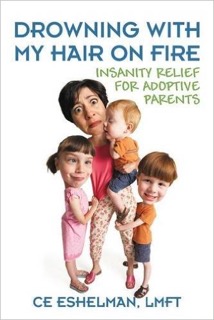
Drowing with my hair on fireHer book for foster and adoptive parents, Drowning With My Hair on Fire, is a must-use resource tool for navigating the choppy waters of being an adoptive parent. Ce’s book is available via Amazon.

1 Comment .
Tags: adoption, adoptive parent, Angelina Jolie, birth parents, Brad Pitt, Ce Eshelman, child therapist, Drowning with my hair on fire, featuredxx, foster care, foster parent, parenting .

10 Questions with permanent cosmetic artists at The Good Geisha

Posted on July 15, 2016 by Urban Suburban Mommy Posted in 10 Questions With .

Amber (L) & Anna (Right)With the taboo long-gone from tattoos, the trend of permanent makeup has really picked up in popularity. I mean, as a mom, I rarely feel I have time for makeup (I’m lucky if I brush my hair before putting it up into a pony tail or topknot) and my morning routine really lacks any beauty to it. Getting permanent makeup is the solution for some. It may be enough for some to get the look they’re going for – for others it’s a basic foundation to their full regime. And it always looks perfect, never a smudge! It’s not only makeup – cosmetic tattooing can be used to hide blemishes and correct scars too. But really, you know you want to know more about it, so we caught up with owner of The Good Geisha,  Amber Gotzmeister who holds the designation of CIDESCO in medical esthetics, and Anna Chow, a trained and expert cosmetic tattoo artist to find out a bit more about cosmetic makeup.

1. Make-up trends change so much – won’t my make-up look dated if I get it tattooed on?

Trendy makeup designs don’t make good cosmetic tattoos. That’s why at The Good Geisha, we aim to customize every individual’s tattoo to enhance and accentuate their features. It is better to be on the conservative side to ensure a timeless cosmetic tattoo. We want to make sure you’re happy with your decisions for years to come.

2. Is it the same process as a typical tattoo with a tattoo gun?

Cosmetic tattoos are real tattoos.  At The Good Geisha we use a state-of-the-art machine exclusively made in Germany for unbeatable precision and comfort; in comparison to a coil or rotary tattoo gun used for body work which is much more aggressive in the skin.  We perform procedures on eyebrows, eyeliners, lips, as well as paramedical procedures for areola, scalp and camouflaging work.  We also use a more traditional method utilizing a manual device called a “microblade” for eyebrow work that is very gentle in the skin and results in a very realistic hair stroked look.  This procedure has become increasingly more popular due to the fact that it is shorter lived and therefore less of a commitment.

3. Is it safe to have a tattoo needle so close to my eyes?

Yes, it is absolutely safe with a certified and trained technician. All eyeliner procedures are performed with your eyes closed, which makes things a lot more comfortable for the client.  Before any eye procedures are performed, a protective eye lubricant is applied into the eye as an extra level of precaution.

4. Can you do blush so that I always have a natural rosy complexion? 

Yes, however this is only an option for a very few skin types.  We measure skin type by the Fitzpatrick Scale (which is a universal scale used to determine melanin density in the skin).  Only those that fit into the scale at a 1 or 2 qualify for this procedure.  Booking a consultation is required in order to determine if this is a procedure for you or not.

TheShop.GoodGeisha.1

5. What should I look for when looking for a Cosmetic Tattoo Specialist?

You should ask how long their training program was.  They should have a minimum of 100 hours of training. How long have they been in the industry? Are they insured? Also ask to see their portfolio of work containing “before, after and healed” photos.

6. Are there cleaning/health/sterilization standards in place like a traditional tattoo parlour? 

Yes, exactly. All tattoo parlours and cosmetic tattoo shops are required to follow a strict sterilization/sanitation process imposed by Health Canada. All tools and needles are required to be 100% disposable only and must be disposed of properly, in combination with full barrier protection of station and technician/artist.

7. What is microblading? Micropigmentation?

Microblading and Micropigmentation are two different methods to eyebrow tattooing.

MICROBLADING is a short term tattoo for the eyebrows.  We use tiny pin like needles (not an actual blade) to implant pigment into the skin approximately 0.5 mm deep using a manual tool.  This results in crisp realistic lines that resemble real eyebrow hairs.  This style of tattooing is meant to last up to 1 year.

MICROPIGMENTATION is a permanent tattoo for eyebrows, eyeliners, lips, beauty marks, colour correction, scaring, areola/ nipple complex, and scalp using a state of the art electrical machine.  Any form of tattooing on the face, palms of hands, and soles of feet will fade faster than anywhere else on the body. Therefore the longevity of the tattoo will be unique to each person’s needs, skin type, and lifestyle.

Eyebrows - Before

Eyebrows – Before

Eyebrows - After

Eyebrows – After

8. Can any tattoo artist do cosmetic tattooing, or is this a very specialized field?

Cosmetic tattooing is a very specialized field. We specialize in tattooing skin that regenerates quickly and is constantly exposed to light.  These factors create a significant change in the way colour is perceived and so we need to have a greater understanding of colour and how it appears or presents itself through the skin.  For anyone looking into cosmetic tattooing, we highly recommend doing the research to look for certified and reputable cosmetic tattoo technicians to ensure a positive experience.

9. Will I have to refresh and touch up over the years to keep it looking good, like conventional body tattoos – what is the lifespan of a cosmetic tattoo?

 Yes. As with all tattoos, they do fade over time. The lifespan of any tattoo really depends on the individual. Factors such as skin type and lifestyle can impact the longevity of the tattoo. A quick refresh of pigment is all it needs to make the colours pop again!

10. Can you correct the red spots/scars/blemishes on my face?

Cosmetic tattoo can help camouflage certain scar tissue, however this will vary and it will be dependent on the scar. For those who are inquiring about a particular scar, an assessment with the technician will be the best way to find out.

AmberAnna.GoodGeishaThe Good Geisha offers complimentary consultations to help assess the possibility of any cosmetic tattooing. If you’re in or around Toronto, give The Good Geisha a call at 647-351-8899, email info@goodgeisha.com, visit GoodGeisha.com or stop in at 576 Dundas St. W.

facebook iconThe Good Geisha

instagram The Good Geisha

Tags: certification, cosmetic tattoo, medical esthetics, microblading, micropigmentation, permanent makeup, tattoo, tattoo artist, The Good Geisha .

10 Questions that will help you hire a babysitter

Posted on May 30, 2016 by Urban Suburban Mommy Posted in 10 Questions With .

Every parent needs a night out – a night off! It’s hard to decide who to have watch your kids, and it may be an expense you’re not sure about, so Urban Suburban Mommy caught up with Martha Scully of Sitter.com – one of the largest online caregiver resources in North America – to ask all those questions about finding a sitter that you know you want to know but just can’t find the right person to ask.
mind that child

photo: Todd Huffman

1.  Do babysitters charge by the child – or is it a flat rate per hour, regardless?

Most babysitters charge an hourly rate.  Rates tend to change based on the experience of the babysitter.  A parent should always look for an experienced babysitter, if the child is an Infant/Toddler or has any type of special needs.  If there are 3 children or more in the family, an experienced babysitter should always be the choice.

2. Can you expect the babysitter to watch more than one family?  For example, if the kids have friends sleep over, or if the parents go out with other parents and expect the sitter to watch the kids of both families?

It would not be uncommon for a family to ask a babysitter to care for a friend’s children, too, while they go out.  The parent should definitely ask the sitter if this is okay first.  A few things with this: 1) The babysitter should be paid more when they are asked to do this.  2) The sitter should not be asked to do any other duties within the home like cleaning and the meal should already be prepared or take out – like pizza.

3. Should I hire a kid or an adult?

If you have a child under the age of three, it is highly recommended to hire an individual over 18 years old.  All babysitters should have emergency first aid training, regardless of age.

photo: Jay

photo: Jay

4. Are babies more expensive – and can parents expect the babysitter to change diapers or do feedings?

A parent should always have an experienced sitter for an infant. Experienced babysitters usually charge more. If a babysitter is hired to care for an infant, they should be expected to change diapers, feed, and provide a safe environment.

5. When should I cancel a babysitter if my kid is sick?

If your child is ill, it is always best to cancel the babysitter.  This is especially true when a child has an illness that maybe contagious, or may require additional medical care.

6. Can a babysitter give medication – from Tylenol if the kid feels unwell to prescription medicines left by the family to be administered?

It is not ideal that they do, but yes they can administer medicine.  The parent should give written and verbal direction on how to administer the medication. This is at the babysitter’s discretion – if they’re not comfortable doing so they have the right to refuse.

photo: Michael Kordahi

photo: Michael Kordahi

7. If the kids are asleep and the babysitter is there to watch TV and have snacks is it fair to pay the babysitter less for ‘just hanging out’? Do babysitters expect to be paid more if the kids are up and need to be engaged the whole time?

Usually the babysitter feels that her (his) time is her (his) time, so she (he) should be paid the same regardless if the child is sleeping or not. Some babysitters may expect to be paid more for very late hours (after midnight).

8. Is it okay to ask a babysitter to do light chores – dishes, light cleaning?

It is normal for a babysitter to: tidy areas she has been, unload a dishwasher, fold laundry, and other very light house keeping duties.  It would be unusual for a babysitter to do any heavy cleaning unless they had agreed to ahead of time.  This usually would require additional pay.

9. Do babysitters expect to be picked up and dropped off, or is that the babysitter’s responsibility?

Yes, if they are a younger babysitter the parents of the babysitter would expect that you provide a way for them to get home.

10. What should people ask of a new sitter in terms of experience, training, credentials, references?

A babysitter should be interviewed in person and asked a mix of questions related to experience with children, safety, and interest in the position.  Scenario based questions and answers allow the parent the ability to see if they have the common sense needed to care for children.

Urban Suburban Mommy adds:

Ultimately, you need to be comfortable and confident with the person who will be looking after your children. Word of mouth is always popular, and many people also look for a family friend, but agencies are also a great way to find a professional sitter. You can ask for credentials, and you can also ask to do background checks, ask to see qualifications like first aid and police clearance – yes, when it comes to looking after your children, you can dig as deep as will make you feel comfortable, within reason. You may also want to consider utilizing a nanny-cam for that added assurance. Remember, there’s a fine line between being careful and being neurotic – though as a parent, that’s your prerogative.

Establish the expected rate ahead of your first outing – we haven’t given any dollar figures because they vary from city to county and region to region, making expectations very different depending on your location. You may find that less experienced or younger sitters charge less, while the pros, like Registered Nurses and ECE-qualified sitters, charge more. You can simply ask whether they expect transportation or whether they’ll provide their own. It is customary to provide snacks and beverages, as well as meals if the time frame includes customary meal hours. It’s also customary to tip – usually an amount equivalent to half an hour.

Most importantly, find someone your children like. It will be easier for you to leave, comfortably, knowing your children are happy spending time with this person. Interview the person in your home if you can and see how they interact with your children.

And then go out! You deserve it!!!

martha - oct 2008 250

Martha Scully has worked in Child Care industry for over 20 years. She is the Sitter.com Child Care Expert for North America. To learn more please go to Sitter.com

Tags: babysitter, Babysitting, CareGuide.com, childcare, credentials, featuredxx, How much do you pay a sitter, Martha Scully, nanny-cam, Sitter.com .

10 Questions With dog expert Koryn Greenspan

Posted on May 26, 2016 by Urban Suburban Mommy Posted in 10 Questions With .

Some people feel the family isn’t complete without a four-legged friend. Some people feel that pets are too much of an added commitment to take on while raising a family. Many are undecided and put up the good fight as their kids beg and plead for a dog, promising to do everything – while we know better. Urban Suburban Mommy caught up with Koryn Greenspan, CEO, handler and Walker of Urban Dog Walks to ask the questions you know you want to know about getting a dog.

summer udw

1. At what age do you feel kids are ready for a dog in the home?

I love seeing families with dogs as well as kids with dogs. When properly managed, raising children with dogs provides a deeper level of caring, instills earlier responsibility – and a whole other element of fun is mixed into daily life for the little ones, the dogs and for the parent. What parents need to remember is, children are still children. Just as they are not yet ready to care for themselves, they too are not yet ready for the responsibility of caring for a whole other being – like a dog. As long as responsibility and expectations are managed from the start, I’d say any age is really the best age to bring a dog into the home. Just keep in mind that, for the most part, you will be the dog’s caregiver, not your child.

2. Is a smaller dog easier to handle than a bigger dog?

Given the right environment and proper provision of any dog’s needs, all dogs are relatively easy to handle. The key is to finding the right dog for the right home and the right handler/family life. Small dogs have different needs from that of their larger contemporaries, however, that does not necessarily mean they are easier to handle. All dogs have different needs – I’ve met some very little dogs who have given their humans quite a run for their money 😉

3. How many walks per day does a dog need?

One of the greatest gifts you can give your dog is consistency; once you have a schedule for them I would suggest trying to stick to it as best you can. There are two basic types of walks that every dog requires in a day. ‘Business transactions’ so to speak, and leisure/exercise walks. Both are completely necessary every day. I’d say at a minimum 4 ‘Business Transactions’ and 2 others for an exercise, mind engaging walk or run. Both of these walks should be 45 mins to an hour minimum.

udw just dogs

4. Is it different for puppies from older or senior dogs – or is this best for all dogs When house training?

5. Every dog is different, every dog has different needs and every dog is at a different stage in their overall health and physical needs. With that being said, as a general rule of thumb:

Senior Dogs do have an advantage as, for the most part, they are house trained and can go 6+ hours without needing to be let out.

When effectively executed, house training for puppies can be accomplished in 3 – 7 days.

However, before 3 months, puppies do need regular supervision as well as as many opportunities to go outside as possible. Training starts the minute you bring them into their new home and the responsibility to provide consistency in scheduling, as well as house training expectations is for you to set and for them to follow. Set them up for success in all areas of their new life, especially in the area of house training. Remember, they WANT to go outside. Dogs are clean animals and respect the place where they sleep the most.

Ultimately, you know your dog best and will know what your dog’s needs are in order to ensure their happiness and wellbeing. As a general rule of thumb, at a minimum, 4 outs for ‘business transactions.’ Remember, 95% of “bad” dog behavior occurs when their needs are not being met.

6. Are there breeds that are better for families – more specifically young kids?

Labs, Golden Retrievers and Doodles are always a fam fave.

Each are incredibly loving, loyal & fun

7.  Crating – yes or no?

New puppy – Yes Crate!

Middle Aged Dog – Depends On How You Feel.

Senior Bear – Likely Not

The greatest gift you can give a puppy is a crate. Remember, dogs are innately pack animals that ‘den’. By giving your puppy a crate, you are giving it a home, a place, a spot and a den to call its own. If effectively managed, this will become one of their favorite places to be and can be an incredibly valuable tool while house training.

As your dog matures, you will fall into a groove. When this happens some people choose to use the crate some of the time (when they go out), most of the time (for sleeping purposes as well) and rarely if ever (the crate is left in the home just in case and for the comfort of the dog).

Then we have the Senior Dogs AKA ‘Beloved Beauties’. Rarely-to-n,ever is the crate used and by all means this is most definitely ok (unless the crate is still used on the daily which is a perfectly acceptable option).

With that being said, everybody takes on their puppy in their own way. If you find something that works then keep with it!

fall udw

8. How many dogs can you walk at one time – sometimes it looks like dog-walkers are about to get dragged away?

Oh, that’s hilarious!

Personally I can easily manage 10 dogs at one time, however, there are laws in place for professional Dog Walking Companies. Dog Walkers are legally aloud to walk a max of 6 dogs at a one time, a rule that I personally believe in. Myself and all Urban Dog Walks employees abide by this guideline.

As for being dragged away, nope, not on our watch!

I have created a unique walking technique that all of us at Urban Dog Walks employ when out on our walks. Basically all of our paws are attached to one harness and each has a different length of leash to walk with. UDW’s focus is structured, on leash walks with an emphasis on socialization, safety, exercise and fun. It is a true pack mentality that is created by walking in this way, and the dogs just love it.

9. Do you ever find incompatible dogs?

Just like people, not all dogs get along … and that’s ok!

Urban Dog Walks conducts meet and greets prior to all walks, and upon joining the UDW family. I like to get a sense of each of our clients personalities & what their needs are. The integrity & safety of each existing pack is always top of mind and if a personality conflict were to arise they are simply placed in a different group or transitioned into a different walking structure. Thankfully, there has never been an instance where a true conflict has occurred.

UDW does offer a Solo Walk option. Some dogs just prefer to be on their own.

10. Allergies being what they are – are there any really ‘hypoallergenic’ dogs?

Good news, hypoallergenic dogs do exist and are not unicorns!! Ready, Set, Doodle!

With regard to hypoallergenic dogs they are literally heaven sent. I know many an allergic human who snuggles up on the daily with their doodle and they could not be happier about it. Word to the wise, this breed does require regular grooming as their fur tends to matt extremely easily. I work with a dozen or so doodles and they are divine. Being hypoallergenic is the extra bonus – they are all just too sweet all of the time.

Koryn greenspanKoryn Greenspan is the CEO of Urban Dog Walks. Urban Dog Walks is an upscale, professional dog walking & dog care company she started as a passion project, and has boomed into a full dog care service providing business. Koryn is a forever pet lover, a previous professional dog walker as well as handler.

www.urbandogwalks.ca

facebook iconhttps://www.facebook.com/urbandogwalks/
instagram https://www.instagram.com/urbandogwalks.ca/
twitter  https://twitter.com/UrbanDogWalks  

1 Comment .
Tags: beloved beauties, business transactions, crate, dog, dog walker, dogwalking, doodle, hypoallergenic, pet, puppy, senior dog, training .
Next Page »

Stay Social: Urban Suburban Mommy

Instagram

Facebook

Urban Suburban Mommy

Featured on:

Take a look

  • 10 Questions With
  • Bon Voyage
  • Delicious Dishes
  • DIY
  • Domestic Goodness
  • Fame & Fam
  • FML Mommy
  • Inspiration
  • Mommy Approved
  • Sponsored Post
  • The Best You
  • The Struggle is Real
  • Urban Suburban Daddy
  • Urban Suburban Mommy

Nav

  • The Struggle is Real
  • Domestic Goodness
    • DIY
    • Delicious Dishes
  • Urban Suburban Mommy
    • The Best You
    • Urban Suburban Daddy
    • Mommy Approved
      • Sponsored Post
  • Bon Voyage
  • Fame & Fam
  • 10 Questions
  • FML Mommy
  • About
    • Contributors
    • Contact us
    • Home
    • Write for us
    • Work With Us
  • Elisa Krovblit Keay

40 is the new baby

You're 40-ish and have a young family. We get you - we're there too.

Pages

  • About
    • Contributors
      • Alexis Nicols
      • Alissia Marciano
      • Clara Power
      • Danielle Reid
      • Erica Wearing
      • Kasia Waloszczyk
      • Kate Nash
      • Krista Holmes
      • Lauren Millman
      • Sara Duck
    • Elisa Keay
    • Work With Us
    • Write for us
  • About us
  • Cart
  • Checkout
  • Coming soon
  • Contact us
  • Elisa Krovblit Keay
  • Fullwidth page
  • My Account
  • Shop

Archives

  • May 2023
  • July 2022
  • November 2020
  • November 2019
  • July 2019
  • October 2018
  • August 2018
  • July 2018
  • January 2018
  • December 2017
  • November 2017
  • October 2017
  • September 2017
  • August 2017
  • July 2017
  • June 2017
  • May 2017
  • April 2017
  • March 2017
  • February 2017
  • January 2017
  • December 2016
  • November 2016
  • October 2016
  • September 2016
  • August 2016
  • July 2016
  • June 2016
  • May 2016
  • April 2016
  • March 2016
  • February 2016
  • January 2016
  • December 2015
  • November 2015
  • October 2015
  • September 2015

Categories

  • 10 Questions With (27)
  • Bon Voyage (20)
  • Domestic Goodness (89)
    • Delicious Dishes (77)
    • DIY (9)
  • Fame & Fam (14)
  • FML Mommy (7)
  • Inspiration (1)
  • Mommy Approved (48)
    • Sponsored Post (5)
  • The Best You (44)
  • The Struggle is Real (94)
  • Urban Suburban Mommy (56)
    • Urban Suburban Daddy (7)

WordPress

  • Register
  • Log in
  • WordPress

CyberChimps WordPress Themes

© Urban Suburban MOmmy
Never Miss A Post

Stay Connected